Showing posts with label 2019-2020 Notes. Show all posts

Thursday, May 28, 2020

VIDEO: CARBON, THE SHAPE OF LIFE (Part 3)

This is the final video of notes for our Final Unit of the Spring 2020 Semester:


The STUDY GUIDE based on all the Organic Chemistry Notes is available HERE.

By popular request, there will be one more (makeup) ZOOM session tomorrow morning, Saturday, May 29th, at 11:00 AM.   

All outstanding work in the course will be accepted until 12:00 (noon) on Monday, June 1st.

Made available outside of instructional time for my students.   Copyright (C) 2020 by Scott Hatfield.  All Rights Reserved.

Sunday, May 24, 2020

VIDEO: CARBON, THE SHAPE OF LIFE (PART 2)

Students:  The video below covers hydrocarbon structure and their nomenclature (the rules used to name organic compounds), and introduces the concept of functional groups.   


Students who attended no ZOOM conferences in the previous week should first watch the earlier video before watching this, and should use the 'Naming Organic Compounds Study Guide' sent last week as a PDF file attached to an earlier email.

A makeup ZOOM conference will be held on Tuesday morning for all students, at 10:00 AM, May 26th.   The regularly-scheduled ZOOM will be on Tuesday after at 1:00 PM for Honors and 2:00 PM periods 2-4.

If you have not visited ATLAS recently, please do so.  Any assignment shown on ATLAS since March 20th that does not show a grade is probably something you need to attempt in order to raise your percentage grade.

Sunday, May 17, 2020

VIDEO: CARBON, THE SHAPE OF LIFE (Part 1)

This video summarizes the major points of the first ZOOM conference from Week 5 (May 10-14).


Students are introduced to the astonishing versatility of carbon, and asked to consider how carbon's atomic structure allows it to build so many different kinds of molecules, with so many different shapes.

Videos for subsequent lessons will appear during the next week, where we are introduced to hydrocarbon nomenclature.

Sunday, May 10, 2020

FINAL ASSIGNMENT: NUCLEAR CHEMISTRY

STUDENTS:

You should have received a NUCLEAR CHEMISTRY STUDY GUIDE as a PDF file through district email.  That STUDY GUIDE is available on-line, HERE.

The STUDY GUIDE is based on material covered in the ZOOM Conferences.  If you missed one or more of the ZOOM Conferences, you can still complete by watching the four videos that demonstrate this material, available on the class blog in previous posts.

This assignment is worth 35 (!) points of extra credit, and Instructions on how to complete the assignment are in the email.   It's worth a lot, because it summarizes the material we've covered on Nuclear Chemistry, and we've covered A LOT:

Beginning this Tuesday, we will be in our next unit, on ORGANIC CHEMISTRY.


Saturday, May 9, 2020

VIDEO: THE ROAD TO FISSION

Students:

This is the video that covers material in the course related to fission and fusion, the kinds of nuclear reactions that are common in high-energy conditions (such as the interior of stars), but which for all purposes have little natural impact on planet Earth: 


Beginning in the 1930's, scientists learned how to make these reactions occur in experimental conditions, and for better or worse, ushered in the Atomic Age.  An important step in the development of this technology was the Manhattan Project, which in turn was triggered by the Einstein-Szilard Letter to President Roosevelt.

An assignment ("The Einstein-Szilard Letter") based on this material, as given in class, is available online HERE.

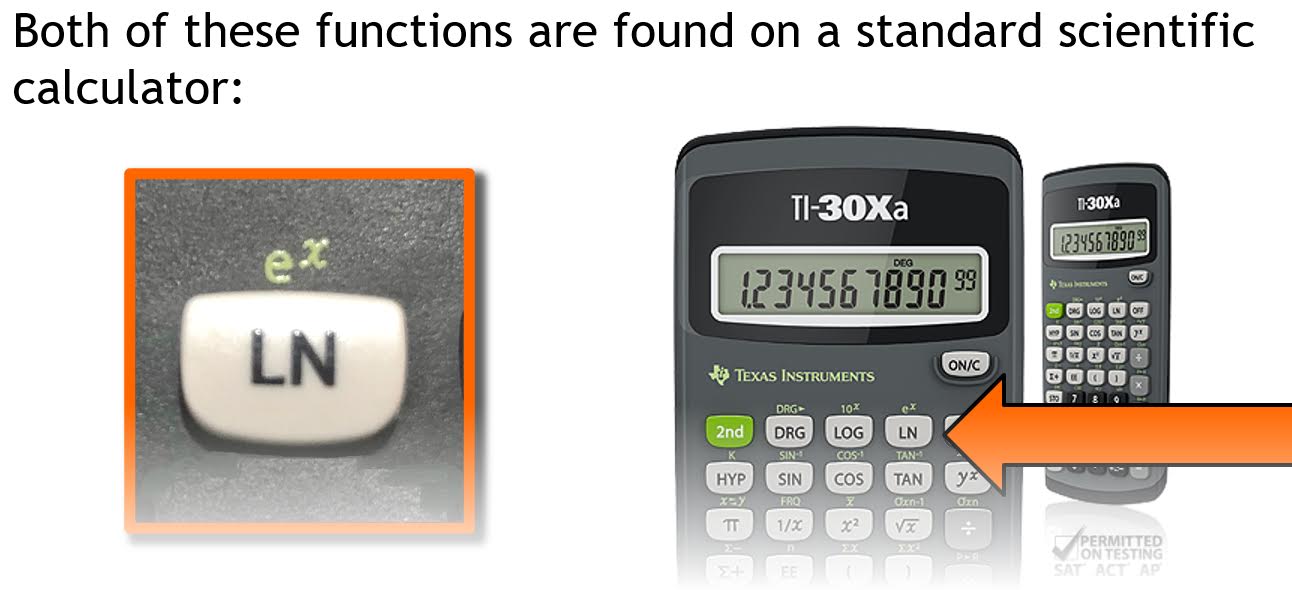
The front part of the video also covers, with some detail, the mathematical basis of half-life calculations based on two related functions (ex and ln):


If students are still struggling with this content, Mr. Hatfield refers you to the full demonstration video, found in the previous blog post, HERE.

Wednesday, April 29, 2020

VIDEO: HALF-LIFE CONCEPTS AND DEMONSTRATIONS

THIS WEEK'S LESSON (CLASSWORK)

Students:

You will find a video summarizing this week's lesson on radioactive half-lives below:


THIS WEEK'S TASK (HOMEWORK)

At the end of the video, there will be three problems involving the half-life calculations demonstrated in this week's ZOOM lesson and on an embedded demo in the original Power Point. 

COPY THE THREE PROBLEMS AT THE END OF THE VIDEO, and use the flowchart technique modeled in the video to answer the questions.   Take pictures of the three problems and send them, attached to an email, to:

Scott.Hatfield@fresnounified.org  

Sunday, April 26, 2020

VIDEO: TYPES OF NUCLEAR REACTIONS

Students: if you were unable to attend last week's ZOOM conference, you missed notes and demonstrations that are very helpful in completing last week's class assignment.  

If, for whatever reason, you have not attempted that assignment, please watch the video below:


After watching the video, students should be able to attempt alpha decay, beta decay, gamma and positron emission, electron capture and alpha bombardment problems!  


If you have not already done so, please email Mr. Hatfield and request a link in order to get that assignment:


Scott.Hatfield@fresnounified.org

Now, if you are late in focusing on this, please understand that when students attend ZOOM conferences, they not earn extra credit for doing CLASSWORK, they also learn about that week's TASK, which earns students extra credit for participating in HOMEWORK.  There will always be at least one task given every week for each class.

Now, here's your NEXT TASK for the week of April 22-29.  It will be something that looks like THIS:


Again, in order to get YOUR copy of the task, please send Mr. Hatfield an email, at:

scott.hatfield@fresnounified.org

Mr. Hatfield will forward a copy of the task as a PDF file.   Either print out the file or copy down the problems on a piece of paper.   Attempt everything given!   Then, take a picture of each page's work, with your work shown, and attach that image to a SECOND email, which you will send to Mr. Hatfield!

YOUR CLASS'S NEXT ZOOM CONFERENCE

1st (10:00 AM) and 2nd period (11:00 AM) will have ZOOM conferences on Wednesday, 4/29.  

Periods 3 (10:00 AM), 4 (11:00 AM) and 5 (1:00 AM) will conference on Thursday, 4/30.   

You will need to attend one of these to earn extra credit for this week's lessons.


Monday, April 20, 2020

VIDEO NOTES: NUCLEAR CHEMISTRY (NUCLEAR NOTATION)

Students:  not everyone has been able to attend a ZOOM conference or email me in a timely fashion to request the notes they have missed.

And the fact is, we need to go on!   
                       
                                
This coming week,  we will be looking at various types of decay processes, which will use the nuclear notation that was taught last week.  

To make sure that all students have access that material, I have edited together the notes and combined them with short videos that walk students through the same demonstrations that I did 'live' last week.  

If you didn't see them, or you need to review, please watch the embedded video above.

1st (10:00 AM) and 2nd period (11:00 AM) will have ZOOM conferences on Wednesday, 4/22.  

Periods 3 (10:00 AM), 4 (11:00 AM) and 5 (1:00 AM) will conference on Thursday, 4/23.   

You will need to attend one of these to earn extra credit for this week's lessons.

There will also be an embedded blog post on Wednesday that will describe your next assignment, which you will do at home and then email with images attached to complete.

Thursday, March 5, 2020

HONORS NOTES: KINETICS


Students, here are the Power Point Notes on Chemical Kinetics, which covers the concept of equilibrium and the rates of reaction.


The Study Guide will be made available in class on Monday, March 19th.  If you need to get another copy, you can download a PDF version of the Study Guide HERE.

The previous Power Point Notes on Thermochemistry are available HERE.

YOUR UNIT 6 TEST 

on  THERMOCHEMISTRY AND KINETICS is on Monday, March 9th.   

As always, extra time is available at LUNCH or AFTER-SCHOOL.


Wednesday, February 26, 2020

HONORS: THERMOCHEMISTRY NOTES

Students:

Here are the Power Point Notes for Unit 6:  Thermochemistry.  


In this you will find discussions of phase changes (again!),  heat transfer, the 1st and 2nd Laws of Thermodynamics, and problems to calculate energy (q) , specific heats and enthalpies of reaction:

Click here to download those notes.

Tuesday, January 28, 2020

VIDEO: GASES

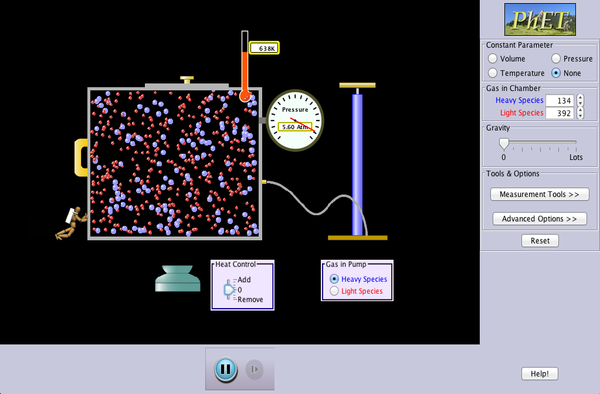
Paul Anderson helps us out again.   This video has a great set of demonstrations using a set of interactive animations.   Students are expected to complete a worksheet based on this video:


 The simulation that Mr. Anderson uses in the video can be accessed online, at the University of Colorado, HERE:


Gas Properties
Click to Run

Sunday, January 26, 2020

UNIT 5: KINETIC THEORY OF GASES

Chemistry Students in Periods 2, 3, 4 and 5:  

Rather than provide a Syllabus this semester, I have decided to periodically put up a post that simply lists major assignments and their due dates for given Units, similar to what is posted on the whiteboard in the front of class.  

I feel comfortable doing this because my policy has always been to accept work for full credit during the unit regardless of what the due date is, giving students flexibility within the unit to complete work as they are able.

After the Unit Test for that Unit, students are given a grace period of one week to hand in any late work without penalty, and (barring serious medical or family emergencies requiring a parent contact) I don't accept that work after than point.

1st week of instruction:

Fall Semester Review Packet (50 points of extra credit)  3 versions:  White, pink or green.  Molar masses, 1 and 2-step conversions, balancing equations, mole ratios, stoichiometric setups, naming ionic compounds

Classwork:  Converting Pressure and Temperature (20 points)  Both pressure and energy are units derived from the unit of force, the newton (N).  Students are shown how to derive these values, and how to convert units of pressure and energy, as well as convert from one temperature scale to another.  White handout.

DPQ 1:  Comprehensive Review problem, incorporating balancing and mapping equations, stoichiometry and molar masses (10 points)

2nd week of instruction:

Study Guide: Kinetic Theory of Gases (20 points)  To be completed before the Unit Test, used to complete student's notes inside their Composition Book, and handed in on the day of their Test.

To help students make SURE their Notes are complete, I am placing them on-line.  Students can download the Power Point containing those notes HERE or by clicking on the graphic, below.  (Note, this is a very large file, at 27 MB):


Should students misplace this Study Guide, I am making a PDF version of it available on-line, HERE.  Students, make sure your notes are completed in your Comp Book on Tuesday's test!

DPQ 2-4:  Endothermic vs. exothermic processes, pressure and energy conversion problems, temperature scale conversion problems.

Can Crush Lab (20 points)  Students will attempt to use kinetic molecular theory to explain the implosion of an aluminum soda can.   Following the lab, students will make a series of guided drawings with colored pencils in which they attempt to demonstrate what the gas molecules are doing. Later, data from the lab is used to infer the relative pressure (P) acting on can's initial volume (V), which is 0.355 L.  Pale green lab paper, but grade based on work in Composition Book.

Homework:  Review Packet 2 (50 points, NOT extra credit). More molar mass, conversion and stoichiometry review problems from the first semester.

This math never really goes away, people.

3 versions:  neon green, neon orange, neon purple

3rd week of instruction:

DPQ 5:   Boyle's Law conversion problem. 

Classwork:  Boyle's Law Problems (20 points)   P1V1= P2V2.  Students should write out variables first, identifying knowns and unknowns. Then, they should plug both values and units into equation and isolate the unknown by dividing "both sides" by the nearest known, in the processing cancelling out unneeded units.  Blue or violet.  Also includes review of STP, pressure/temp conversion.

Homework: Introduction to Gas Law Problems (20 points)   One more time: review of STP, pressure and temp conversions.   More Boyle's Law.   Gas laws using ratios like Charles' Law (V1/T1=V2/T2) or Gay-Lussac's Law (P1/T1 =P2/T2) . A sneak peak at putting them all together in the Combination Gas Law.   Bright blue cover, two pages.

Video Worksheet: Gases (20 points) to be given at beginning of 4th week of instruction.


HONORS UNIT: IDEAL AND REAL GASES

Honors Students:  Rather than provide a Syllabus this semester, I have decided to periodically put up a post that simply lists major assignments and their due dates for given Units, similar to what is posted on the whiteboard in the front of class.  

I feel comfortable doing this because my policy has always been to accept work for full credit during the unit regardless of what the due date is, giving students flexibility within the unit to complete work as they are able.

After the Unit Test for that Unit, students are given a grace period of one week to hand in any late work without penalty, and (barring serious medical or family emergencies requiring a parent contact) I don't accept that work after than point.

1st week of instruction:

Fall Semester Review Packet (50 points of extra credit)  3 versions:  White, pink or green.  Molar masses, 1 and 2-step conversions, balancing equations, mole ratios, stoichiometric setups, naming ionic compounds

Classwork:  Compound Gas Law (20 points)  Orange in color.

DPQ 1:  Comprehensive Review problem, incorporating balancing and mapping equations, stoichiometry and molar masses (10 points)

2nd week of instruction:

Study Guide: Ideal Gases and Real Gases (20 points)  To be completed before the Unit Test, used to complete student's notes inside their Composition Book, and handed in on the day of their Test.

To help students make SURE their Notes are complete, I am placing them on-line.  Students can download the Power Point containing those notes HERE or by clicking on the graphic, below:


Should students misplace this Study Guide, I am making a PDF version of it available on-line, HERE.  Students, make sure your notes are completed in your Comp Book on Tuesday's test!

Ideal Gas Law Problems (20 points) Pink.  PV=nRT

DPQ 2-4:  Ideal Gas Law

3rd week of instruction:

Ideal Gas Law Lab (20 points)  Combining stoichiometric limiting reactant setups, balancing equations, molar masses and application of ideal gas law using that period's actual atmospheric conditions.  Randomly assigned different concentrations of acetic acid and different volumes of plastic bags, students must correctly predict the amount of carbon dioxide gas required to fill those volumes such that they create a "pillow" to catch a falling egg.   Ideally, this lab has been rehearsed for at least one full class period and each student can successfully do the necessary calculations for themselves.

DPQ 5:   "Egg Drop" style calculation using the Haber process instead of the reaction between acetic acid and sodium bicarbonate.

DPQ 6:  "Egg Drop" style calculation using different units for atmosphere and pressure, different volumes and concentrations.


Monday, December 9, 2019

POWER POINT, HONORS: KINETIC THEORY OF GASES

Students:  Here are the final set of Notes for our 2019 Semester Final.   You are also responsible for being able to calculate 1, 2 and 3-step stoichiometry problems as on the previous test, including problems with molar concentration (molarity) that relate to liquids and gases, as well as the material on the properties of solutions covered in the previous set of notes.


Tuesday, December 3, 2019

NOTES: STOICHIOMETRY OF FLUIDS

Students: HERE are the Power Point Notes on 'Stoichiometry of Fluids', which both Honors and Regular Chemistry students are responsible for on their Finals.   


This section of notes covers problems having to do with molar volumes of gases, limiting reactants and percent yield, molar concentrations and other properties of solutions.   A Study Guide based on these notes is available HERE in PDF form.


REGULARS: SOLUTIONS VIDEO

Students can watch Paul Andersen's discussion of solutions and their properties as many times as needed here, on-line, in the video embedded below:


Students can also access the PDF version of the worksheet given in class, based on this video, HERE.

Tuesday, October 22, 2019

NOTES: ELECTRON CONFIGURATION

Students, here is the Power Point for the Unit 2 notes on electron configuration, orbitals, models of the atom, and rules for electrons:


Students should use this along with the previous section of Notes to complete the Study Guide for next Thursday's test (10/18), and along the way make sure that everything in the Study Guide does, in fact, appear in their notes.

HONORS: THE PERIODIC TABLE

HONORS STUDENTS:  Here are the Power Point Notes on the Periodic Table given in 1st period.  

Inside you will find information about the structure of the periodic table, how to read it, how to calculate molar masses, isotopes and ions, ionic and covalent bonds.   This needs to be completed in your Composition Book this week, as we are moving on to other material.


Wednesday, October 9, 2019

HONORS: THE CONVERSION EXPERIENCE, PART 2


Honors Students:

This is the SECOND part of 'The Conversion Experience', which are the Notes that form the basis of the Study Guide of the same name.


The first part covered the concept of the mole and molar conversion problems, which used fractional setups with cancellations.

This second part adds the concept of the balanced equations used to describe chemical reactions, and combines those equations with molar conversion setups to make real-world measurements of predictions of actual reactions.


Just click 'HERE' or on the graphic above to download the notes!

Wednesday, October 2, 2019

REGULARS: THE PERIODIC TABLE

Students:  Here are the Power Point Notes on the Periodic Table given to my 2nd, 3rd, 4th and 5th-period classes.  Inside you will find information about the structure of the periodic table, how to read it, how to calculate molar masses, isotopes and ions, ionic and covalent bonds.  This is all material that will be on your next Unit Test, on Tuesday, October 8th.